
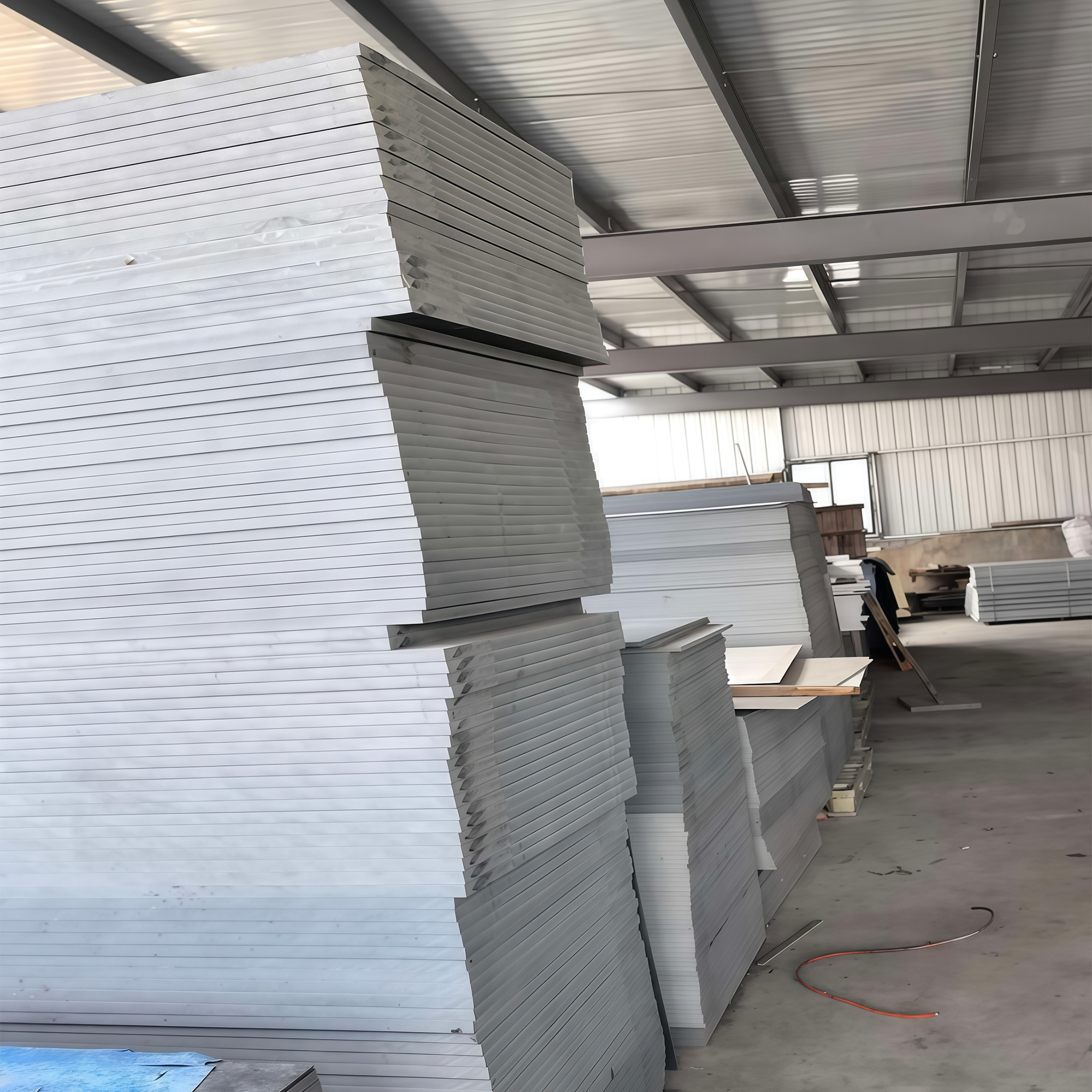
What rigid PVC sheets are and where they fit
Rigid PVC sheet is an unplasticized (or low-plasticizer) PVC panel supplied as a flat sheet. In industrial procurement, the term usually refers to solid PVC sheets used for corrosion protection, equipment lining, tanks, ductwork, and machined parts. It is not the same as foamed PVC sheet, which is lighter and used mainly for signage and display work.
The distinction matters because solid PVC sheet carries different mechanical and chemical behavior than foam board. For buyers, the first decision is application fit: does the part need structural stiffness, chemical exposure resistance, or just a printable surface? If the answer is structural or chemical, specify solid PVC sheet and state the exposure conditions in the inquiry.
Solid PVC sheet vs. foam PVC: a quick decision table
Use this table to align the material type with the job before requesting quotes. Values are typical ranges from general industry knowledge; confirm exact grades with your supplier.
| Attribute | Solid rigid PVC sheet | Foamed PVC sheet |
|---|---|---|
| Density | Higher; typically around 1.4–1.5 g/cm³ | Lower; varies by foam ratio |
| Typical thickness range | Commonly 1–30 mm; wider ranges exist | Often 1–20 mm |
| Mechanical stiffness | Higher; suitable for load-bearing and lining | Lower; not for structural loads |
| Chemical resistance | Good to many acids and alkalis; grade-dependent | Lower; foam structure can absorb |
| Common uses | Tank lining, corrosion protection, machined parts | Signage, displays, light fabrication |
If your application involves chemical contact or structural loading, start with solid PVC sheet and verify the specific grade's resistance data.
Specifying custom size PVC sheets
Custom size PVC sheets are cut to your dimensions, but "custom" means different things to different suppliers. A clear specification avoids rework and disputes. Include:
- Thickness and tolerance: nominal thickness plus acceptable plus/minus range. Thickness affects stiffness and chemical permeation.
- Length and width: final dimensions and whether cuts must be square and burr-free.
- Color and surface: standard gray, white, or other; matte or glossy; one or both sides protected.
- Edge finish: saw-cut, machined, or polished.
- Flatness: allowable bow or warp, especially for large panels.
- Quantity and packing: pieces per bundle, interleaving, and edge protection for transport.
For sheets used in lining or fabrication, ask the supplier to confirm that the sheet can be cut, carved, bent, welded, and bonded as required. These operations are commonly offered for rigid solid PVC sheet, but the specific grade and thickness may affect weldability and bend radius. Request the supplier's recommended welding rod and bonding method for the grade you buy.
Acid and alkali resistant PVC sheets: what to verify
Acid and alkali resistant PVC sheets are formulated or selected to resist chemical attack. PVC is generally resistant to many acids and alkalis, but resistance is not universal. It varies with:
- Chemical type and concentration
- Temperature and contact time
- Applied stress (stress cracking can occur)
- Grade and additives in the sheet
Do not accept a generic "acid resistant" label as sufficient. Provide the supplier with the chemical, concentration, temperature, and exposure duration, and ask for a written compatibility statement for the offered grade. For critical applications, request test data or a sample for immersion testing. Note that PVC is not suitable for all chemicals; strong oxidizing acids and some solvents can attack it. Verify before committing to a lining or tank project.
Supplier evaluation: questions that reveal capability
Rigid PVC sheet quality varies by extrusion control, raw material, and thickness consistency. Use these questions during supplier evaluation:
- What is the sheet's density and thickness tolerance? Can you provide a certificate of analysis or batch test report?
- Which grade do you recommend for my chemical exposure, and what data supports that recommendation?
- Can you supply custom sizes, and what are your cutting and edge-finishing capabilities?
- What is the maximum sheet size available in the thickness I need?
- How is the sheet packed for transport, and what flatness can you hold?
- Can you provide samples for fit and chemical testing?
Ask for the name and typical properties of the base resin or compound. Suppliers who can explain their extrusion process and quality checks are more likely to deliver consistent sheets.
Sample and order validation
Before placing a production order, validate the sheet against your requirements:
- Dimensional check: measure thickness at several points and confirm length/width.
- Flatness check: lay the sheet on a flat surface and measure gap.
- Surface inspection: look for scratches, inclusions, and color uniformity.
- Fabrication trial: cut, weld, or bend a sample using your intended process.
- Chemical test: if relevant, immerse a coupon in the actual chemical at service temperature.
Document the approved sample and keep it as a reference for incoming inspection. For custom size orders, confirm that the supplier's measurement method matches yours.
Common warning signs
- Thickness is consistently under nominal with no tolerance stated.
- The supplier cannot name the grade or provide any property data.
- Chemical resistance is claimed without asking for your exposure conditions.
- Custom sizes are quoted without confirming cutting tolerances or edge finish.
- Packaging is inadequate for flat panels, risking warping or edge damage in transit.
Address these points before ordering; they are easier to resolve in the quotation stage than after delivery.
Next steps for buyers
Start with a written specification that states thickness and tolerance, dimensions, color, surface, edge finish, flatness, and chemical exposure. Send it to two or three suppliers and ask for a grade recommendation with supporting data. Request a sample for fabrication and, where relevant, chemical testing. Once the sample is approved, place a trial order and inspect against the approved sample before scaling up.